+Intertrace Insights
Intertrace
Field guides from Intertrace security engineering for the people who run AI programs.
22 pieces · newest first
Guide10 min read
Seen is not protected: six coverage states between discovery and enforcement
Read-only discovery produces a long list of AI assets and nothing gets safer. Six beliefs that keep the list from turning into protection, what is true instead, and the evidence each coverage state needs, from seen to verified protected.
Intertrace
Guide9 min read
OAuth connects the account. Policy governs the action.
An integration broker solves OAuth plumbing, but a connected account's scopes describe what the provider's API allows, not what your agent should do. Seven beliefs about brokered agent access that fail in practice, what the RFCs actually say, and the calls that test each seam.
Intertrace

Guide10 min read
Whose key is the agent using? The credential lifecycle from first grant to revocation
A dispatch agent loops at 2 a.m. and nobody can stop it without breaking four other jobs or waking the engineer whose token it uses. One incident, followed through identity, scoped grants, rotation, measured revocation and offboarding.
Intertrace
Guide10 min read
Coding agents need broad access. Production should not be part of it.
A coding agent inherits every credential your shell can reach, so a session that starts with a failing test can end at the production database. Seven controls that keep production out of reach, why each matters, and the test that proves it.
Intertrace
Guide10 min read
Your internal assistant answers anyone with anything in the index. Fix it before retrieval.
Internal RAG assistants leak because the index is built with an administrator's access and queried by everyone. The case for putting the permission check inside the retrieval query, the two strongest objections, and why caches, summaries and revocation belong to the same argument.
Intertrace
Guide10 min read
When the policy check fails: the questions to settle before agent enforcement goes down
What should an agent do when its policy service is slow or down? The questions a design review asks about timeouts, cached decisions, retries and streaming, answered: route a missing decision by consequence, bound the cache, and key retries to the intended action.
Intertrace

Guide11 min read
An incident response playbook for an agent that crossed its authority
When an agent does something it should not, nothing was hacked in the usual sense and the standard playbook finds nothing. One fictional incident, followed from discovery to restore through five steps mapped to NIST SP 800-61 Rev. 3.
Intertrace
Technical paper9 min read
The loosening hidden in a tightening: shipping agent policy changes with replay
One pull request against a procurement agent's policy, followed through rule tests, a 30-day decision replay, monitor mode, staged enforcement and an audit link to the commit, showing why peer review backed by a decision diff beats a change board.
Intertrace
Technical paper8 min read
Tenant isolation when every customer shares the model
Cross-tenant leaks in AI products rarely come from model weights. They come from prompt caches, vector indexes filtered by a client-supplied field, memory, shared tool credentials and logs. Seven checks, why each matters, and the canary tests that prove them.
Intertrace
Technical paper9 min read
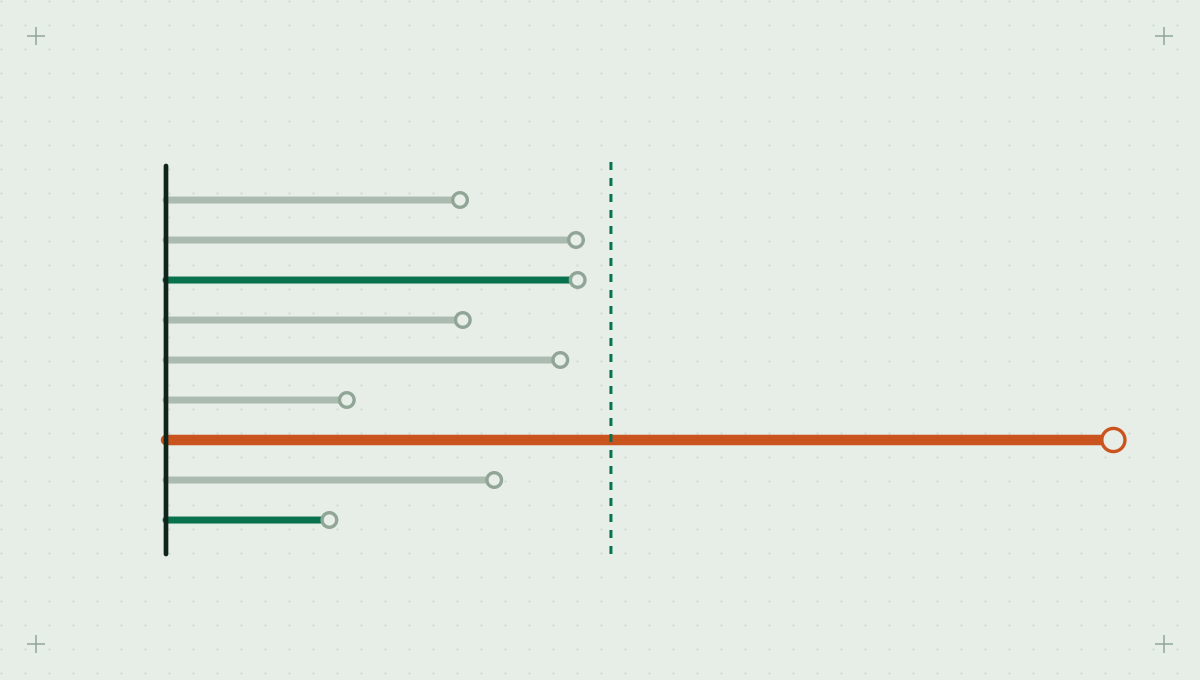
The cost of a guardrail: latency and inference budgets for runtime AI security
Every runtime security check spends latency and money on the request path, and the share of traffic sent to an LLM judge sets both your bill and your p99. Six decisions, in order, for building a guardrail product teams will keep switched on.
Intertrace
Guide9 min read
What an AI security incident costs, and how to model one for an agent
IBM's 2026 benchmark puts the average breach at USD 4.99 million, but an agent incident costs what the agent did. One fictional refund agent, one attack, two cost outcomes, and a model you can fill in with your own numbers.
Intertrace
Guide8 min read
Shadow AI: your team already uses it, and a ban will not change that
Banning unapproved AI tools mostly moves their use out of sight. Five myths about shadow AI, from the chat tab to connected apps and unattended agents, and what to do instead: discover, decide tool by tool, and offer a faster sanctioned path.
Intertrace
Guide10 min read
Vendor agents in your systems: scope, logs and a kill switch that works
Vendors now ship agents that act inside your CRM, inbox and repositories with credentials you granted. The six decisions to make for each one, in order: identity, scope, contract, logs, a kill switch you control, and a clean exit.
Intertrace
Guide9 min read
What auditors ask about AI agents, and the evidence that answers them
Auditors and customer questionnaires now ask about AI agents. The six questions that come up, answered the way a reviewer tests them, how they map to SOC 2, ISO/IEC 42001 and the NIST AI RMF, and how to produce the evidence continuously.
Intertrace
Technical paper10 min read
Securing agents that click: computer-use and browser agents
A hotel receipt tells an expense-filing browser agent to change the reimbursement bank account. A step-by-step teardown of how that works, then the controls that hold even when the injection lands: isolation, allowlists, gated clicks, credential handling, redaction and takeover.
Intertrace
Technical paper10 min read
Red teaming AI agents as a continuous program, not an event
A red-team report describes the agent you had last quarter. The case for running it as a regression suite instead: technique-indexed cases, sandboxed tools, scoring by consequence rather than refusal text, benign twins, and reruns on every change.
Intertrace
Guide9 min read
Data residency for LLM traffic: where prompts go and how to keep them there
An in-region model endpoint settles one copy of a prompt out of six or more. Following one fictional EU insurer's claims assistant: map every copy, read provider regional terms down to the exclusions, and route by data class.
Intertrace
Guide10 min read
Due diligence for the AI features already inside your SaaS
The assistant your CRM, docs or helpdesk switched on last quarter is a new data path from a vendor you approved years ago. Six checks, with reasons and tests, from data path and training use to injection, logs and contract terms.
Intertrace
Guide9 min read
Why AI pilots stall at security review, and the kit that gets them through
AI pilots that impress in a demo often wait months in security review because nobody can say what the agent can touch or how it is stopped. The decisions to make before the review, in order, a six-part kit, and a ten-day path to approval.
Intertrace

Guide9 min read
An AI acceptable-use policy people will actually follow
AI policies fail when they list tools instead of data, prohibit without a route to yes, and contain clauses nothing checks. Six beliefs behind those failures, and the replacements: three lanes, one owner, expiring exceptions and evidence for every clause.
Intertrace
Technical paper10 min read
What to record for every agent action: a security telemetry schema
Agent logs inherited from performance monitoring say how long and how much, not who, on whose authority, or why it was allowed. A five-band event schema mapped to OpenTelemetry GenAI conventions, with privacy rules and retention tiers.
Intertrace
Guide10 min read
Threat model an AI agent in one afternoon
Most agent threat models study the model and miss the credentials. This five-pass, four-hour method models authority instead: data flow, real permissions, consequence tiers, everyone who writes into context and failure tracing, ending in one page with named owners.
Intertrace
+Stay current
New research, the week it publishes.
Subscribe with RSS, or email support@intertrace.ai with a topic you want covered. To see the controls in action, try the Simulation Lab or read the documentation.